


19th Century Animal Paintings
19th century animal paintings were among the most popular and sought-after works of the era.
In a book 'Treasures of the Art in Great Britain' published in 1854-7 the author comments, 'In no country is so much attention paid to the different types of animals as in England, &, although a mercenary reason may be assigned in the cases of horses, oxen, and sheep, yet a feeling for the beauty of these animals is very general'.
Animal portraiture was well paid, although it attracted very few top of the league artists of the time. One such, Ben Marshall is quoted as saying, 'many a man will pay me 50gns for painting his horse who thinks 10gns too much for painting his wife'.
An artist specialising in this genre could expect a good constant supply of work and a steady income.
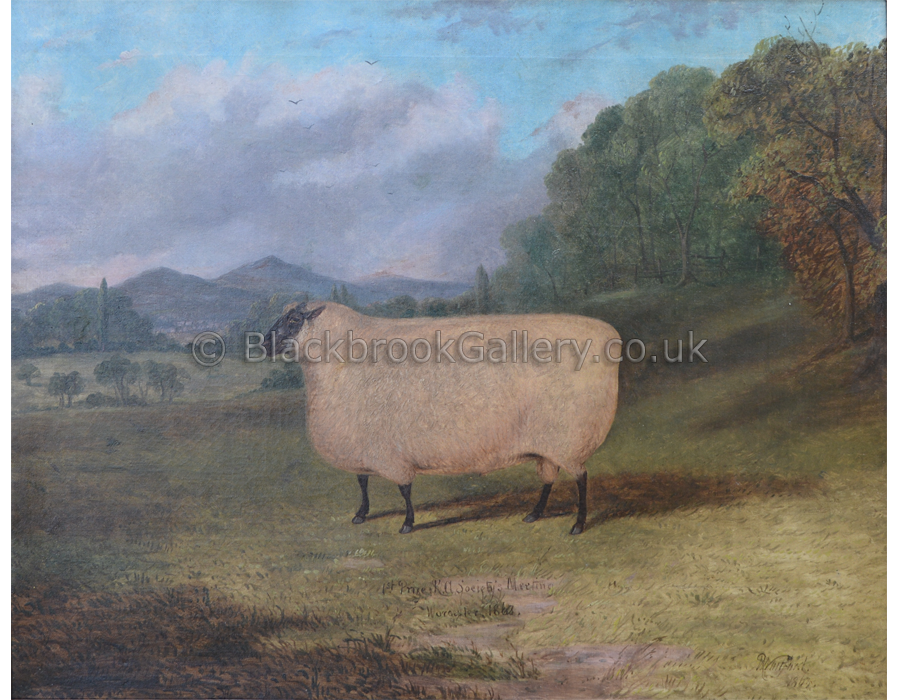
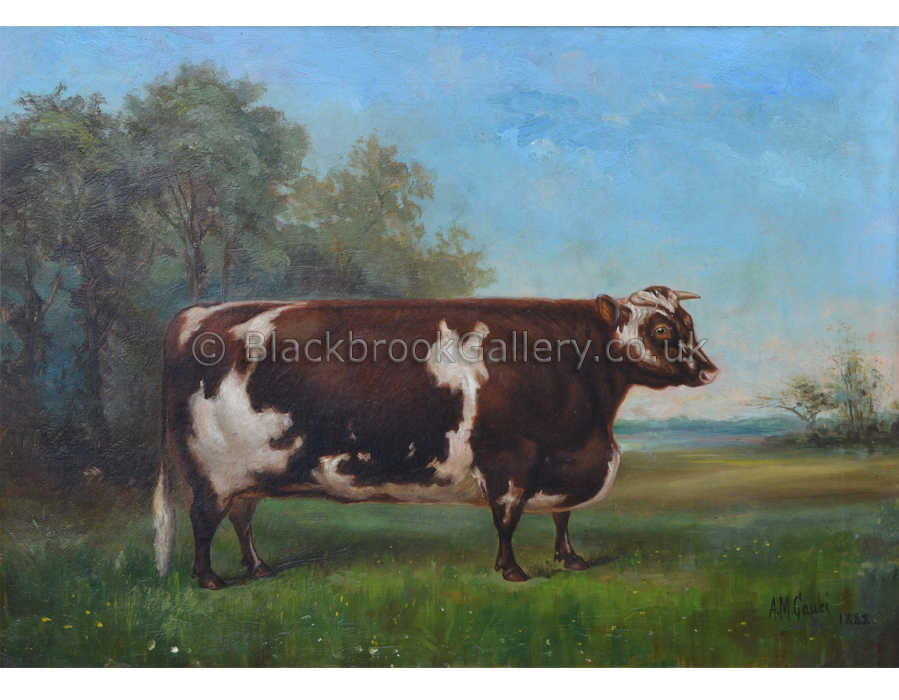

In the 1780's & 90's once the fashion for farm animal portraits became established it was an excellent addition to the portfolios of artists who had up to that point been limited to horses & dogs.
Breeders went to great lengths to produce 'improved' animals with refined heads, and bone, good straight backs, well-formed hind quarters & plenty of fat. When they commissioned a portrait of their favourite beast to impress their friends, clients & the world at large they would encourage the artist to emphasise the creature's best features. Whether the wishes were adhered to depended very much on the integrity of the artist, but it must be born in mind that at this time animals could be 'fed up' for a great many years before reaching their potential & also fat was considered an absolute pre-requisite of the time. Fat meant profit as it could be used for a great many uses apart from food. For example as oil for a poor man's lantern etc. Patrons had very specific ideas about how an animal should be portrayed. They required that they were shown in profile so that the size of the animal and its proportions and beauty would be fully appreciated.
Artists who undertook these works ranged from the highly accomplished & well paid which record accurate images of what was being bred at the time, to men who were not of any great calibre & may even have been local odd-job men who could turn their hand to most things. These images are more naïve but none-the-less delightful and charming.
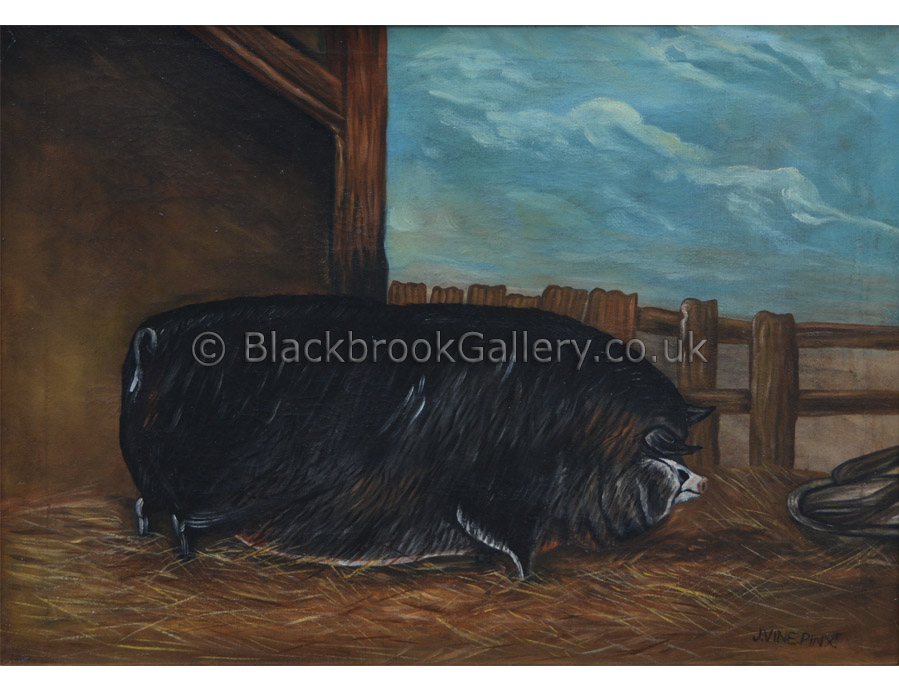

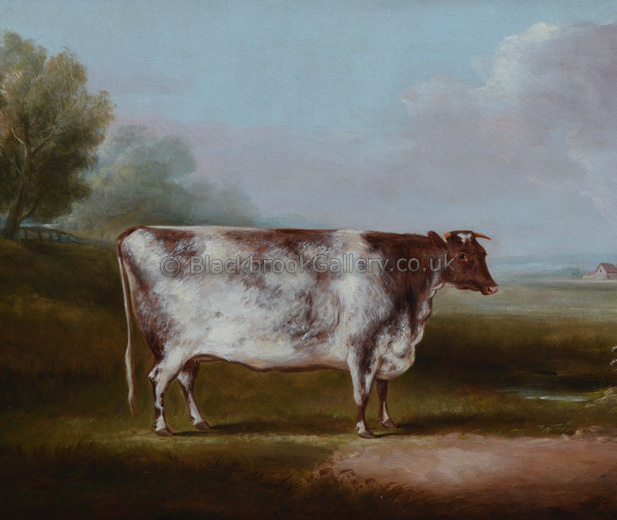
Livestock breeders regarded these paintings as important promotional material for their celebrated animals. They would have been displayed in their grand country houses & farmhouses to impress visiting agriculturalists. Some artists were commissioned to paint the same animal several times to enable not only the breeder but future owners of the animal or its offspring to have a lasting image of their most prized possession. Owners liked their animals to be painted when at the very 'height of perfection' which quite often entailed the artist going along to record their likeness prior to an important sale or even before the animal was sent for slaughter so that they had a record to keep for ever. Only the most exceptional animals were painted.
One of the earliest animals of the genre to be portrayed in this way was the 'Lincolnshire Ox' by George Stubbs in 1791.
These paintings are more than likenesses of the animals, they are historic documents. They show us farm buildings & landscapes of a vanished age. Agriculture was at the time the premier industry and livestock was a vital part of that business.
Popular 19th Century Animal Painters
Our collection of 19th century animal paintings features works by some of the most admired artists of the era. Each brings a unique perspective to rural and agricultural subjects, capturing the character, presence and beauty of animals in distinctive and enduring ways.
- John Frederick Herring Snr. – One of the most celebrated animal painters of the 19th century, renowned for his masterful portrayals of horses, livestock and rural farmyard life.
- James Ward – A highly accomplished painter and Royal Academician, known for his powerful and dramatic depictions of cattle, horses and other animals.
- Richard Ansdell – A popular and prolific Victorian artist admired for his large-scale rural scenes and sensitive portrayals of farm animals and sporting subjects.
- John Vine – A much-loved naïve artist who built a fine reputation painting the horses, cattle and dogs of the Essex gentry, bringing warmth and charm to every subject.
- William Henry Davis – A prolific 19th century painter of prize livestock, whose detailed and characterful studies remain among the finest records of the era's celebrated breeds.
These artists, along with many others in our collection, offer a rich and varied view of 19th century animal painting, providing works that are both historically significant and enduringly appealing for their craftsmanship and charm.
19th Century Animal Paintings FAQ's
19th century animal paintings are portraits and studies of animals, primarily prize livestock, horses and dogs, created during the 1800s. They range from highly accomplished works by professional artists to charming naïve pieces by self-taught painters. Far more than simple likenesses, they are historic documents that record the farm buildings, landscapes and celebrated breeds of a vanished age.
Agriculture was the premier industry of the time, and livestock was at the heart of that business. Breeders regarded these paintings as important promotional material, displaying them in their grand country houses and farmhouses to impress visiting agriculturalists, clients and fellow breeders. Owning a portrait of a prize animal was a mark of status and pride.
The most popular subjects were:
- Prize cattle, particularly shorthorns, longhorns and other improved breeds
- Horses, including racehorses, working horses and hunters
- Sheep, including celebrated rams and ewes from notable flocks
- Pigs, bred for their size and fat
- Dogs, particularly sporting and working breeds kept by the gentry
Only the most exceptional animals were considered worthy of being painted.
The genre attracted a wide range of talent. Among the most celebrated were John Frederick Herring Snr., renowned for his mastery of horses and farmyard scenes, James Ward, a Royal Academician known for his powerful depictions of cattle, and Richard Ansdell, admired for his large-scale rural subjects. Alongside these accomplished names, naïve artists such as John Vine and William Henry Davis produced equally charming and historically significant works.
Patrons had very specific ideas about how their animals should be portrayed. Animals were almost always shown in profile so that their size, proportions and beauty could be fully appreciated. Breeders would encourage artists to emphasise their creature's best features, including refined heads, strong straight backs, well-formed hindquarters and plenty of fat, which at the time was considered an absolute mark of quality and profit.
19th century animal paintings fall broadly into two categories:
- Accomplished works, produced by trained, well-paid artists who exhibited at institutions such as the Royal Academy, offering accurate and detailed records of the breeds being developed at the time.
- Naïve works, painted by self-taught or itinerant artists, sometimes local odd-job men who could turn their hand to most things. These images are more charming and informal in character, but no less delightful or historically valuable.
19th century animal paintings have long been appreciated not only for their artistic and historic significance but also as a sound investment. As records of celebrated breeds, prize animals and the agricultural landscape of the era, they occupy a unique place in both art history and social history. Blackbrook Gallery has been specialists in this field since 1989 and is always interested in both buying and selling works of quality.
Blackbrook Gallery offers a carefully curated collection of 19th century animal paintings available to view online and at antique fairs and events throughout the year. You can browse the gallery, explore works by individual artists, or get in touch directly with an enquiry. The gallery is based near Coalville, Leicestershire, however we have sold pieces to every corner of the globe. We can be reached by telephone on 01509 503276 or by our online contact form .
Want to see more? Follow Blackbrook Gallery on Instagram to view our paintings and keep up to date with the antique fairs we attend!