


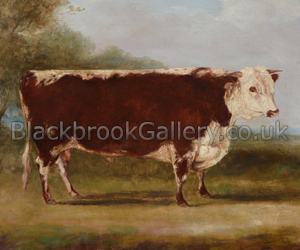
Prize Cattle and Sheep Farm Animal Paintings: Why Victorian Farmers Commissioned Portraits of Their Livestock
At Blackbrook Gallery, we are proud to bring collectors closer to the traditions and craftsmanship behind 19th century British art. Among the most fascinating pieces in our collection is the farm animal painting, a type of portrait commissioned by Victorian farmers to celebrate their finest cattle and sheep.
Whether you are a seasoned collector or simply curious about this distinctive genre, these paintings offer a window into a world where livestock was both a livelihood and a source of pride. Long before photography became widespread, a well painted farm animal was often the only lasting image a farmer would ever have of his most prized possession.
1. A Symbol of Agricultural Achievement
During the Victorian era, selective breeding transformed British farming. Farmers competed fiercely to produce cattle and sheep with the greatest bulk, the finest wool, or the most desirable proportions, and a prize-winning animal could bring both fame and fortune to its owner.
Commissioning a farm animal painting of a champion beast was a natural extension of this pride. A painting served as a permanent record of an animal’s achievement, often outlasting the animal itself and standing as proof of a farmer’s skill and standing within the agricultural community.
These works were rarely intended as fine art in the conventional sense. Instead, they were a form of documentation, capturing exact proportions, markings, and colouring with a level of care usually reserved for portraits of people. In many cases, the farmer would insist on specific details being included, from a particular curve of the horn to the exact patch of colour on a flank, since the painting needed to be recognisable as that individual animal and no other.
2. A Distinctive Naive Style
A farm animal painting from this period is often celebrated for its naive charm. Painted by itinerant or self-taught artists travelling from farm to farm, they favour bold outlines, flattened perspective, and an almost sculptural rendering of the animal’s bulk.
Rather than diminishing their appeal, this untrained quality is precisely what makes them so collectible today. The exaggerated proportions, oversized bodies balanced on comparatively small legs, reflect the farmer’s own priorities rather than any artistic convention, giving each painting an honesty and character that more formal art often lacks.
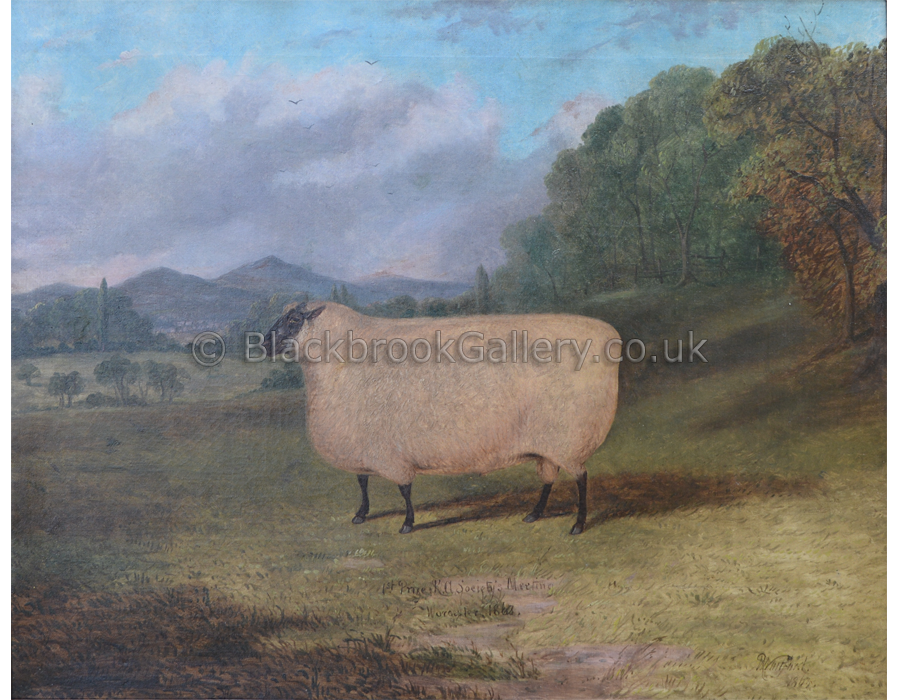
Key characteristics of these paintings include:
Exaggerated Form: Cattle and sheep are often depicted as remarkably broad and well-fleshed, reflecting the breeding standards prized at the time.
Simple, Rural Backdrops: Fields, farm buildings, and pens are rendered plainly, keeping full attention on the animal itself.
Careful Attention to Markings: Coat colour, patterning, and horn shape are recorded with precision, since these details often identified a specific, real animal.
3. The Painters Behind the Portraits
Few of the artists who produced these works trained at an academy. Many were sign painters, coach painters, or general tradesmen who found a steady living travelling the countryside ahead of a livestock show or market day.
A farm animal painting from this era was often completed in a matter of days, sometimes on site in a barn or yard, with the artist working quickly before the animal was sold or slaughtered. This urgency shaped the style itself, favouring bold, confident lines over subtle shading or fine detail, yet many of these painters still managed to capture real character, from a placid ewe to a bull with an unmistakably proud bearing.
4. Why Collectors Value These Paintings Today
A farm animal painting offers something genuinely rare: a direct, unpolished link to Britain’s agricultural history. Each painting tells the story of a real animal and the farmer who bred it, making these works as much a piece of social history as they are decorative art.
For collectors, they bring warmth, character, and a touch of humour to interiors, and they sit particularly well in country homes, farmhouse kitchens, and studies. Many collectors are drawn to the way these paintings blend folk art sensibility with genuine historical significance.
As Blackbrook Gallery continues to source and champion the farm animal painting as a category, we invite you to explore our collection and discover an art form that celebrates both craftsmanship and the everyday life of rural Britain.
Explore Prize Livestock Paintings at Blackbrook Gallery
Looking for your next farm animal painting to add to a collection? Browse our online gallery to view available original paintings, or contact our team to arrange a private viewing.
If you have purchased artwork from Blackbrook Gallery or enjoyed your experience with us, we would appreciate your feedback on our Google review page.